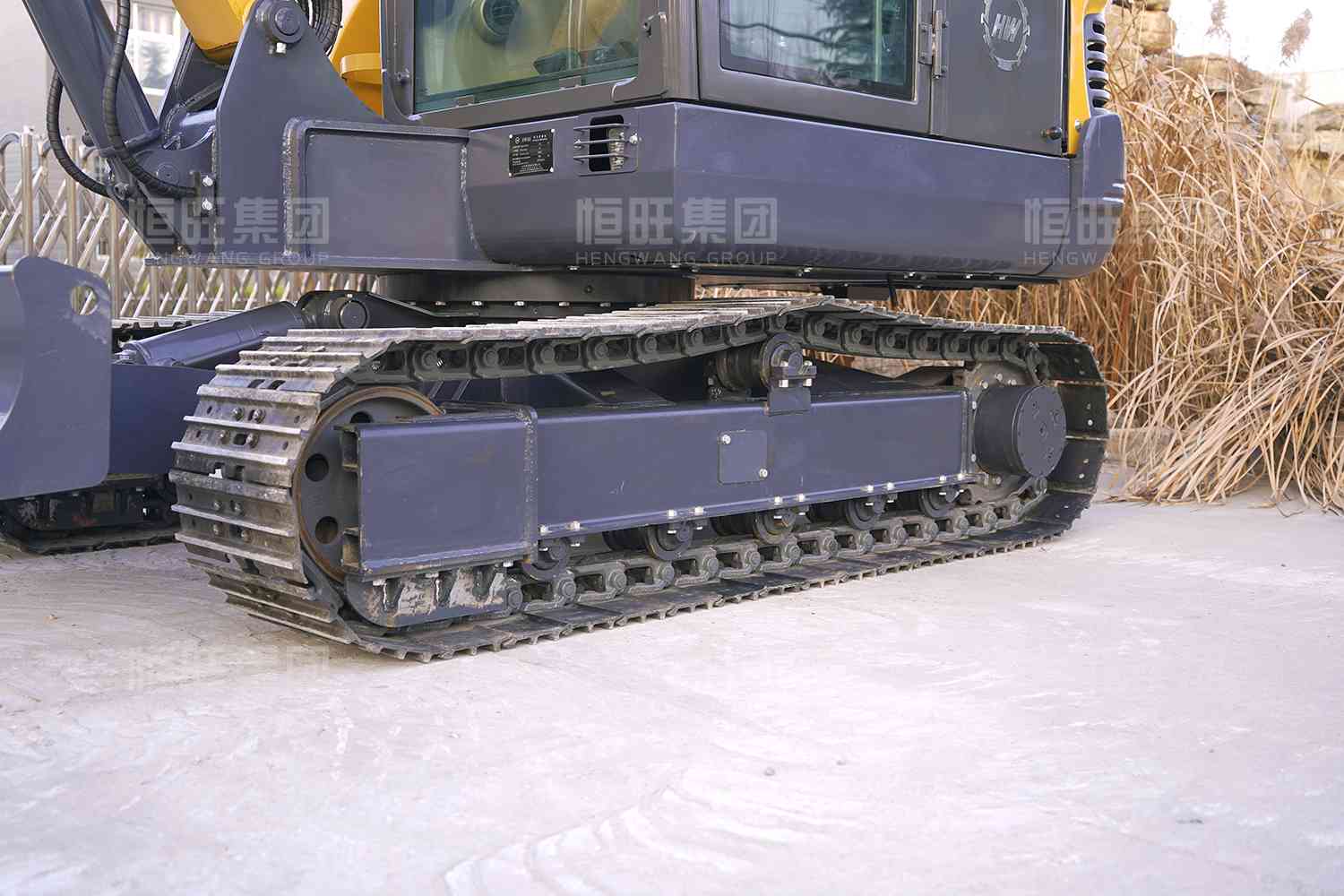
1. Standardize Operation to Minimize Unnecessary Wear
When operating an excavator, avoid sudden turns, abrupt stops, or heavy loads rolling over hard objects. Turn slowly to reduce friction between the track and the ground; clear obstacles like stones and steel bars before working to prevent track plates from being damaged. Walk steadily and avoid driving horizontally on slopes to reduce one-sided stress on the track.
2. Perform Daily Maintenance on Track Components
Regularly apply grease to track pins and bushings to keep them rotating smoothly and avoid increased wear from dry friction. Check for cracks or deformation in track plates, and repair or replace damaged ones promptly. Clean mud and gravel from track gaps to prevent jamming that affects operation.
3. Adjust Work Methods Based on the Environment
In rocky areas, avoid direct contact between the track and sharp stones. After working in muddy conditions, clean the track to prevent hardened soil from wearing components. On soft ground, adjust track tension appropriately to avoid derailment from being too loose or increased wear from being too tight.
4. Regularly Inspect Wheel Systems and Track Condition
Check if the excavator’s drive wheels and idler wheels are aligned; adjust promptly if misaligned to prevent track edge wear. Monitor track tension—keeping it moderately tight avoids derailment (from being too loose) or excessive wear (from being too tight).
Following these steps effectively extends the life of an excavator’s track, ensuring stable and efficient operation.