Crane selection

Aug 20, 2025

1. Lifting Capacity and Stability

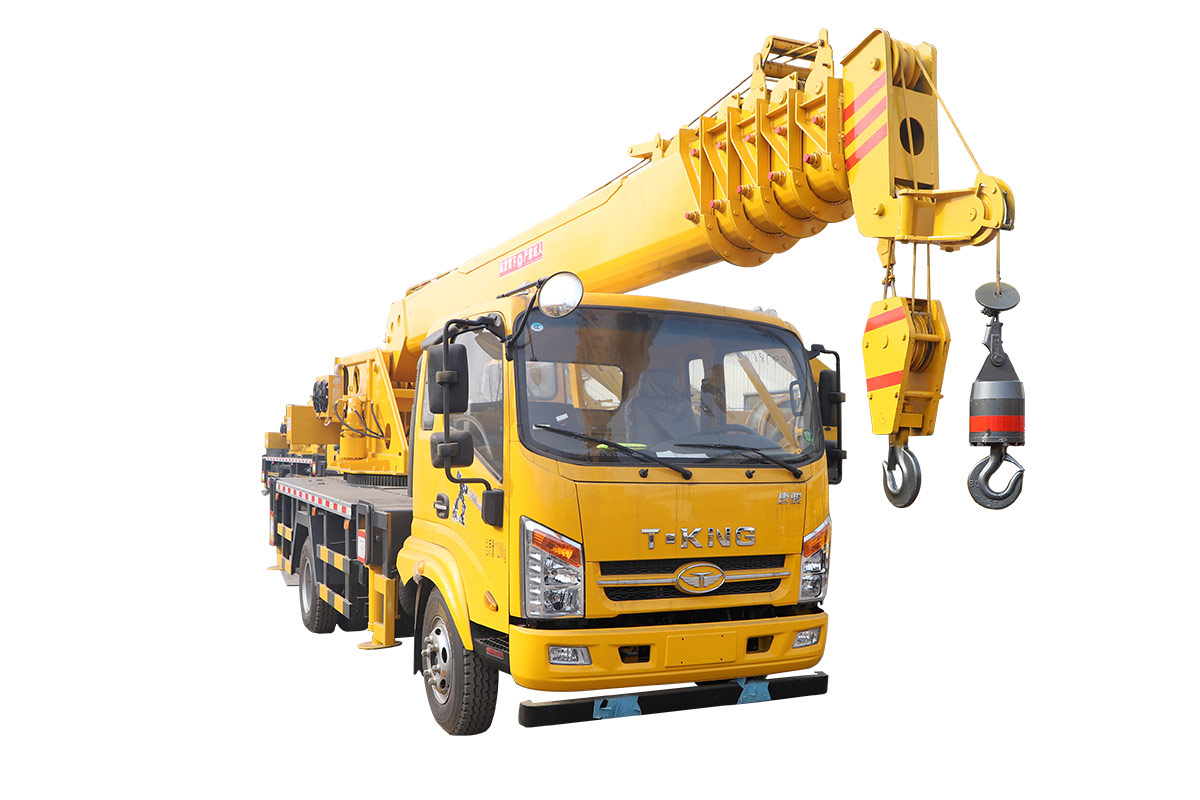
Truck cranes: They have a lifting capacity of 8-1200 tons. During operation, the outriggers must be fully extended and the roadbed must be firmly padded. Otherwise, lifting performance will be significantly reduced. Driving with a load is strictly prohibited (even small-tonnage cranes moving short distances are high-risk operations). Because the tire ground contact pressure reaches 0.7-1.5 MPa, the crane is prone to sinking in soft soil such as mud and sand, requiring additional steel reinforcement.

Crawler cranes: Conventional models have a lifting capacity of 50-3000 tons, while ultra-large models can reach 10,000 tons. Utilizing a crawler chassis (with a ground contact pressure of only 0.05-0.15 MPa), they operate stably without outriggers and can travel slowly with a load (with fine-tuning accuracy down to the centimeter level). Soft soil reinforcement is not required; in extreme cases, only track shoe extensions may be required.

II. Transfer Efficiency and Work Preparation
Mobile cranes: Based on a vehicle chassis, they can be driven directly on the road, with a high-speed travel speed of 60-90 km/h. They are easy to move between construction sites (larger cranes require an overload permit). They can complete outrigger erection and boom extension within 30 minutes of arrival, making them suitable for short-term mobile operations lasting 1-3 days.

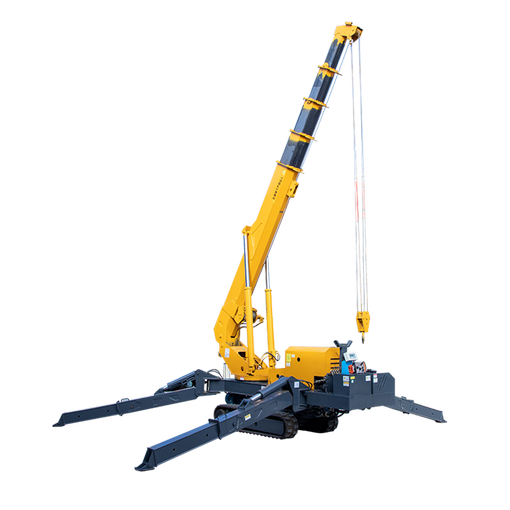
Crawler cranes: They must be disassembled into their boom, counterweight, and crawler components, transported on multiple flatbed trailers. Detailed route planning is required before transport (avoiding weight-restricted bridges and height-restricted tunnels). Assembly takes time after arrival (2-4 hours for small cranes, 1-2 days for large cranes). They are more suitable for fixed-site, long-term projects lasting more than a week.

 1-1J23I5G-4327.png

III. Boom Performance and Applicable Working Conditions

Mobile cranes: They primarily feature hydraulic telescopic booms, with a maximum boom length exceeding 100 meters. They offer fast adjustment speeds (length adjustment within minutes), but are less rigid and exhibit significant deflection when the boom is fully extended or at low elevation angles. They are therefore suitable for lifting at standard heights (e.g., 20-50 meters). Crawler cranes are primarily truss-type booms (welded steel sections for exceptional rigidity). They offer boom lengths of 100-1000 meters (specifically for wind turbines). Adjustment requires manual addition and subtraction of standard sections (taking 1-2 hours). With the same boom length, their lifting capacity far exceeds that of truck cranes, making them suitable for lifting structures at very high altitudes (such as wind turbine towers) and large spans (such as bridge girders).

IV. Core Application Scenarios

Truck cranes are preferred for short-term, flexible needs such as urban pavement (factory areas, roads), multi-site rotation operations (such as lifting steel structures at multiple construction sites), emergency rescue (roadside rescue, equipment repair), and small and medium-sized cargo loading and unloading (trucks, containers).

Crawler cranes are preferred for soft soil (farmland, wetlands), slopes (≤5°), large-scale engineering sites (such as chemical plant installation), ultra-heavy components (reactors, generator sets), high-precision alignment work (equipment installation), and ultra-high/large-span projects such as wind turbines and bridges.

01.jpg

If you would like to inquire, please fill out the form below and we will answer your questions!

Click here to fill out the form

Relative Products

We are committed to providing you with construction machinery products that offer better value for money!

Contact us now to get the most competitive pricing
Get a Quote
Copyright © Shandong Hengwang Group Co., Ltd. All rights reserved.Privacy Policy

Request a quote

Please fill out the form below according to your needs, and our product specialist will contact you within one working day.